


On August 29, Nongshim released a limited-edition instant noodle cup. The packaging replicated the exact noodles eaten by the fictional girl group in Netflix’s KPop Demon Hunters. All 6,000 units sold out in one minute and forty seconds. Nongshim’s stock jumped 9.41% that week, outpacing both of its biggest domestic rivals.
That’s not a marketing stunt working. That’s proof of a pipeline: people consume Korean media, and the curiosity doesn’t stay on the screen. It walks straight into the kitchen, and we’re only just witnessing the first inning of the food side.
KPop Demon Hunters didn’t just rack up views (though it did plenty of that, becoming Netflix’s most-watched film ever and spending 52 consecutive weeks in the platform’s Global Top Ten). What matters more for an everyday consumer is what it did downstream. The film put an international spotlight on Korean food culture, inspiring fans to seek out dishes featured on screen, which is exactly why Nongshim built a product around it in the first place.

As Auroni Majumdar, CJ Food’s Global VP of R&D, puts it, “Pop culture, media, music, film, television captures the marketplace’s attention... and then once they correlate that content to a specific culture, then food quickly follows. Think about it — once you have awareness on this new culture introducing new concepts, you naturally start to wonder what the food tastes like.”
That’s the function pop culture is serving right now: it acts as the awareness engine that makes the business possible. A song or a Netflix hit gets a hundred million strangers curious about a different culture for a weekend. What happens next, whether that curiosity converts into a repeat purchase or evaporates by Monday, is the real story, and it’s playing out in two concrete ways.
#1: The format is different, and it’s sticking
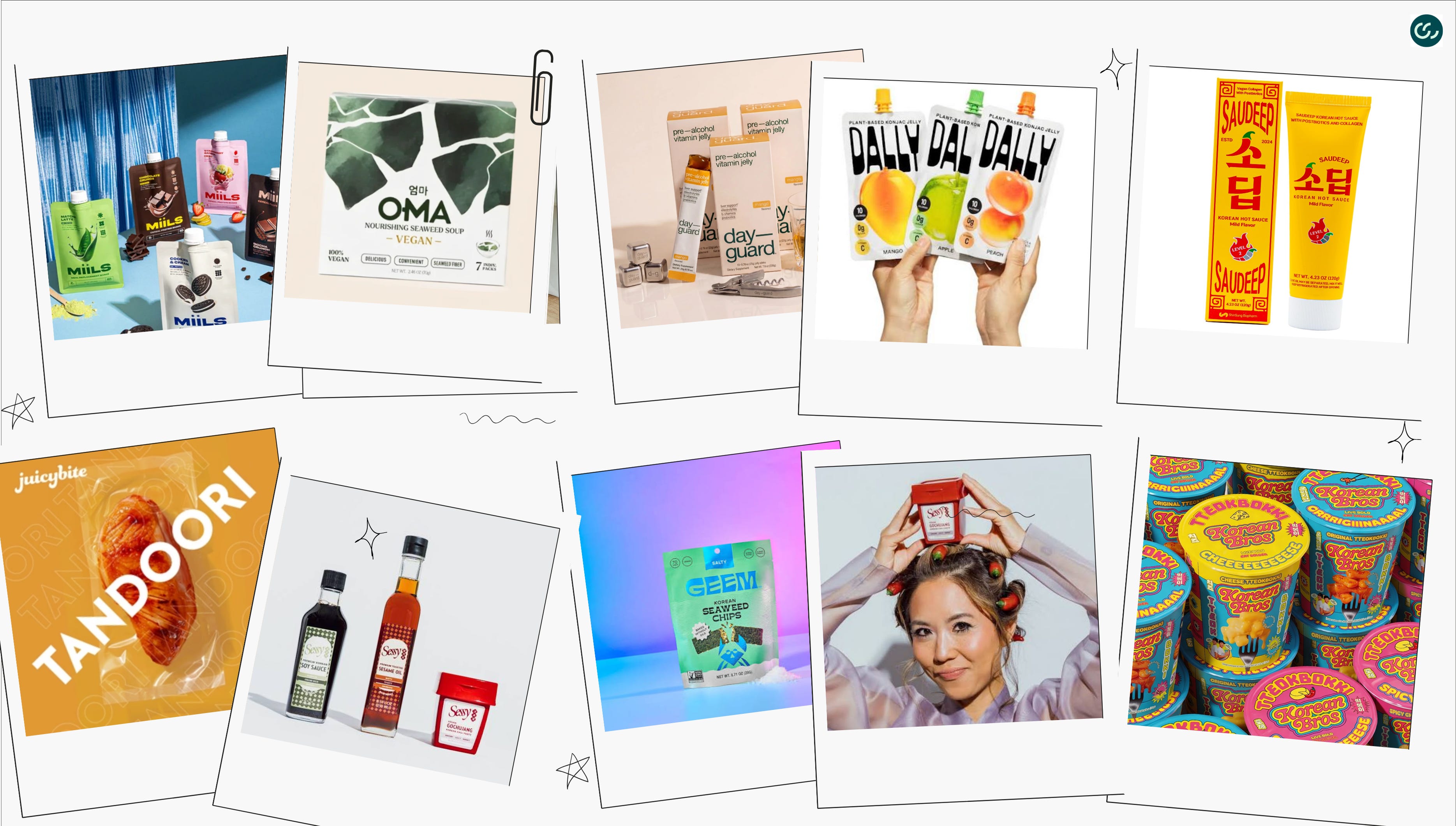
MIILS sells a cereal protein shake in a resealable pouch: add water, shake, drink. 22 grams of protein, 19 vitamins and minerals, no bowl, no blender. Dayguard sells a jelly stick that protects your health when you drink. To a Western audience, these may seem novel, but neither format is new. Korea already treats the single-serving pouch as a primary delivery system — individually portioned formats are how Korean consumers engage with functional products. Think: portable, ready-to-eat shakes and jellies that make the daily supplement feel like a reward rather than an obligation. This is a design insight that the Western wellness industry, still largely committed to pills and powders, has been slow to absorb.
But what’s new is the Western twist: MIILS adds distinctly American flavors (e.g., Strawberry Banana, Cookies and Cream), and Dayguard has intentionally tailored its product to target American audience. They’re both banking on the fact that packaging categories don’t disappear after one viral cycle — and if they’re successful, they’re going to be copied.
“We didn’t find marketing to the American audience to be impossible,” noted co-founder & CEO Chloe Choi." “They just needed a little bit of education since no one had seen this format type before.”
Take another example with OMA. While MIILS took a Korean format and gave it an American flavor, OMA keeps the Korean dish whole: only the format changed.
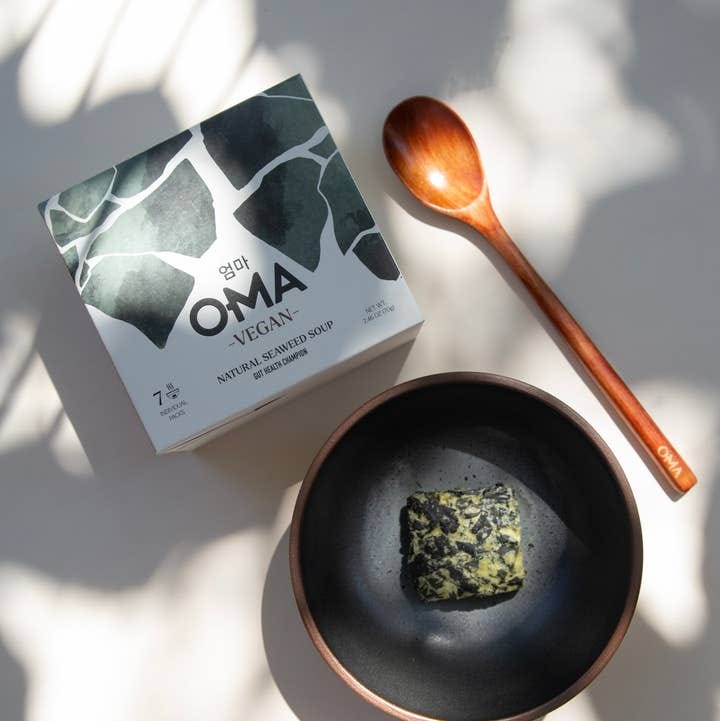
Founder & CEO Yondje Choi turned Korean seaweed soup — traditionally given to mothers undergoing postpartum due to its nourishing nature — into dehydrated cubes that take about a minute to make. Her pitch isn’t to try something exotic, but rather one centered around recovery, nourishment, and care. A gochujang chip is curiosity. A postpartum soup in a packet is trust. Her success is proof that consumers don’t just want the trendy dish, but rather the one Koreans actually lean on.
These brands prove that the next generation of CPG winners won’t be defined by product categories. They’ll be defined by the rituals they own, and Korea is already living in that future.
“Many Americans struggle with digestive issues, and it’s all correlated,” said Choi. “In Korean culture, food is medicine. You think holistically of what you eat. We’ve been doing this for generations and moms have passed [seaweed soup] along for centuries because it’s rooted in tradition.”
#2: Flavors are becoming a default
Sessy, a new Korean-American pantry brand from chef and Food Network personality Esther Choi, launched this year with exactly three products: sesame oil, soy sauce, and gochujang. The positioning isn’t around trying an “exotic” condiment, but rather that these flavors belong in your everyday kitchen drawer. It’s being sold as a foundational trio, the same way you’d stock olive oil and soy sauce, pointing towards a brand built for permanence as opposed to a seasonal drop.
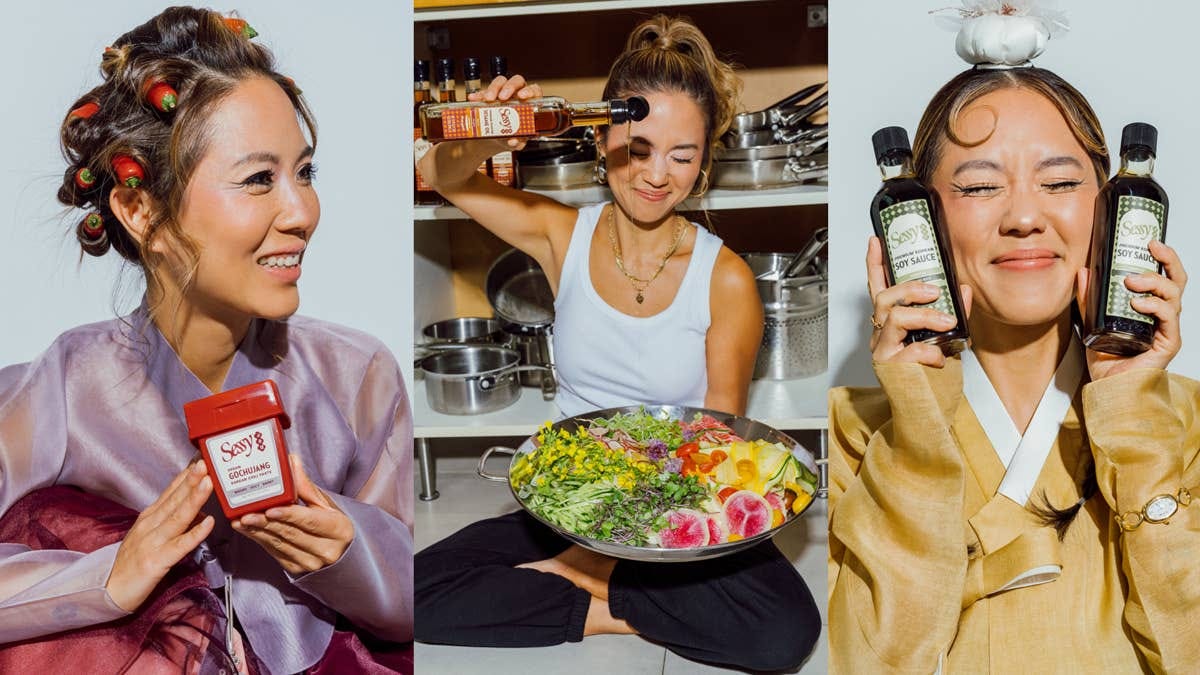
“Sessy tells the story of what these ingredients are in the first place,” said Chef Esther Choi, co-founder of Sessy. “Gochujang, soy sauce, and toasted sesame oil are in every Korean food. You literally can’t cook a Korean recipe without using at least one of these ingredients.”
And we’re seeing legacy American companies are making the same bet independently. Kettle Brand launched a limited-edition Gochujang chip, citing Gen Z and Millennial appetite for sweet-and-spicy flavors and Korean cuisine’s broader growth in the US. Hormel’s SPAM brand launched its own Gochujang variety, pitched explicitly as a tribute to Korean-American fans of the brand. Two unrelated legacy food companies reaching for the same Korean ingredient isn’t coincidence — it’s a flavor crossing over from specialty to default.
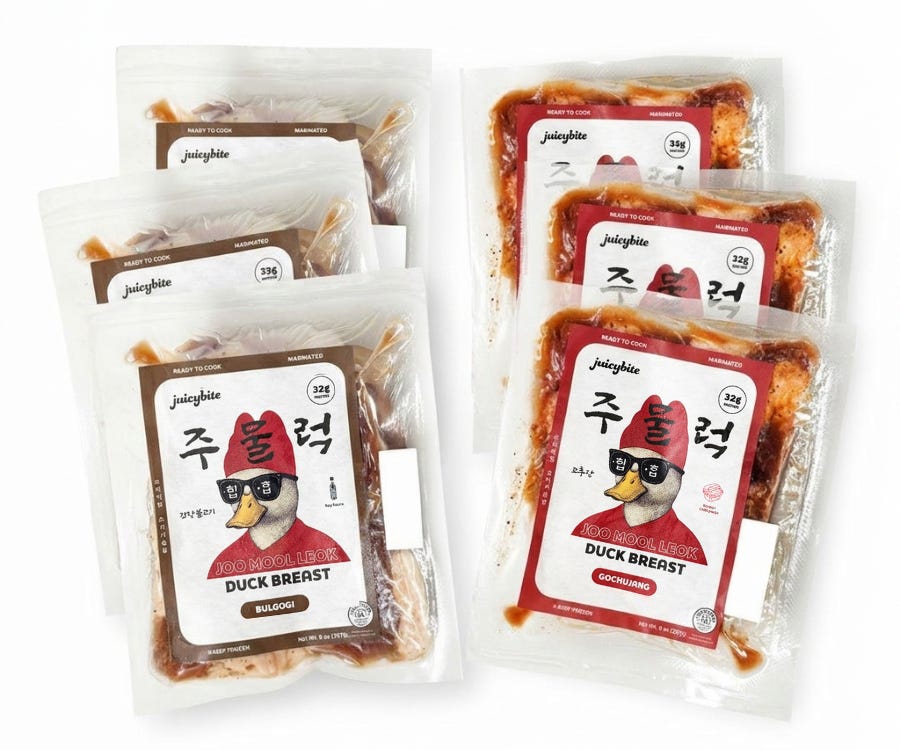
Juicybite further proves how far Western demand for Korean flavor now runs. The brand sells single-serve, fully cooked portioned meat inspired by different Asian tastes. Flavors like Gochujang Duck and Mala Pork would have been niche orders a few years ago, but they speak to an American audience seeking new flavors with a familiar meat format.
Geem makes the same point from the pantry side. It takes seaweed, a staple of centuries-old Korean recipes, and turns it into a healthy alternative. Even the most skeptical seaweed critics love the texture and seasonings. It’s pitched as a plant-based, low-calorie alternative to conventional snacks, aimed at Americans who grew up on potato chips and now want something lighter.
These brands are proof that shoppers aren’t just tolerating Korean flavor, but rather, they’re asking for it. These flavors are the primary selling point, pointing to one conclusion — Korean flavors have already cemented themselves with everyday consumers.
This demand is still compounding. Samyang’s US revenue hit $419 million in 2025, up from $280 million in 2024, a year that was itself up 127%. CJ’s overseas food sales passed its domestic food sales for the full year for the first time in 2025, at 5.92 trillion won. Shoppers aren’t just sampling Korean food — they’re stocking up on it. That’s a trend compounding, not cresting.
“We don't want to be an Asian cultural brand,” said Gene Oh, co-founder and co-CEO of Dayguard. “We want to be an American company that's bringing this superior form factor from Korea. Our goal is to become the biggest supplementation company in America.”
So what’s left? The formats are working, and shoppers have started adapting to familiar Korean flavors that no longer are seen as completely foreign. What the shelf hasn’t done yet is introduce products that are entirely and distinctly Korean. Korean media built the audience. Korean formats won the first purchase. Familiar flavors made it easy. What comes next is harder, and it’s where the value sits.
The media wave isn’t separate from the food wave. It’s one pipeline, and the opportunity sits at the end of it: pair the formats that have already crossed over with the distinctly Korean flavors shoppers haven’t met yet. Familiar Western flavors are easy to copy, and the field is already filling up. That’s why the moat is the distinct — think black sesame, grain, and sweet potato. These are ingredients and flavors Korea actually eats, introduced inside formats Western shoppers have started to adopt.
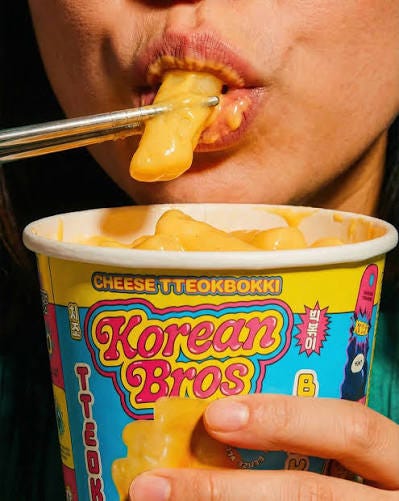
For diners, that means the menu keeps getting more interesting. The familiar Korean flavors are already in the pantry and the snack aisle. Next come the dishes and tastes you haven’t tried: nuttier, earthier, less sweet-and-spicy. There’s a learning curve, and shoppers who’ve already acquired the taste will climb it first.
As it turns out, the path that starts on a streaming screen ends in the kitchen. And once a cultural phenomenon, it’s a safe bet that it’ll be sticking around.
Thanks for reading. We’re Great Circle Ventures, an early-stage VC fund backing exceptional founders redefining the future of food, beverage, and consumer health, leveraging deep industry expertise and strategic corporate partnerships to accelerate growth. This article was written in collaboration with CJ Foods and Stealth to Wealth.
If you found this useful, hit subscribe below and follow us on IG (@greatcirclevc) and LinkedIn. And if you’re a founder noticing this same trend, we’d love to hear from you.